Great communicators have great voice inflection. Now you and your team can, too.
Use intonation patterns that make your message resonate
What voice inflection skills will do for you

- you'll sound like you have a mastery of your material (i.e., you'll sound like a subject expert)
- you'll sound engaged and confident
- your voice will reveal your flow of thought instead of hiding it
- you'll be easier to listen to because it will take less mental effort to process your speech
- you'll save time when recording because you'll make fewer intonational mistakes
- you'll also save time editing because there will be fewer mistakes to edit out
- you'll be able to read a script as communicatively as a newscaster
- you'll have the conceptual tools to evaluate your intonational performance and that of team members
- you'll like the sound of your recorded voice
Why you need intonation training
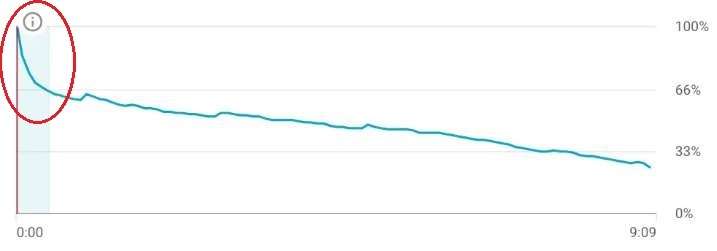
Listeners have higher standards than you think
During the first 15 seconds of most videos, the audience drop-off rate is frightening (see graph). Listeners are hearing the presenter's voice for the first time and are making a snap judgment whether to stay or leave. Many leave because they have high standards for speakers.
Why their standards are so high
Listeners' expectations have been formed by listening to the top 1% of communicators. They're used to hearing the 1% broadcasting the news, narrating documentaries, and teaching on the top Youtube channels. As a result, they expect you to have clear intonation as well.


The listener is always right, not you
Conquering your fear of public speaking doesn't make you a good speaker. Many people conquer their fear of singing karaoke (like Sting in the photo), but still sound awful. You're only a good speaker if you can hold the attention of listeners who are free to click away (or not call back). That's why you need intonation training.
Training that was once impossible is now possible
Many people think that the only purpose of voice inflection is to avoid monotone and not sound boring. But there's more to it than that. If that's all voice inflection did, then your voice pitch could rise and fall randomnly. The exact timing of the rises and falls wouldn't matter.

But linguists now know better. To communicate your meaning effectively, you have to perform the right pitch patterns at the right time. You have a bit of wiggle room, but not much.
Fortunately, you can master the pitch patterns quickly, since there aren't that many. (After all, your voice pitch can do only three things: go up, go down, or stay level.)
So if effective communication is a priority for you or those you lead, don't miss this important innovation in communication skills training. Advances in the study of voice inflection, combined with our own research breakthrough, have made possible what was once impossible.
© 2026 Jobspeak Training
Privacy policy | Terms of use